The Trip
There are destinations that expand your sense of scale, and then there is Alaska. The forty-ninth state doesn't just dwarf every comparison — it renders most of them irrelevant. A week is barely enough time to begin to understand it. We landed in Anchorage on the morning of June 29th, fifty years of anticipation finally giving way to actual tarmac. Anchorage itself is, to be generous, a transit point — workmanlike, functional, the kind of city that exists to give you somewhere to sleep before you head toward the things that actually matter. And what matters is extraordinary.
The first two days eased us in. A drive north to Hatcher Pass and the Independence Mine — a handsome alpine ruin set in a valley that could pass for the Swiss Alps, the kind of stop you'd dismiss on paper and then find yourself lingering in for an hour. On the way back, the highway near Willow opened up and Denali appeared on the northern horizon: a white pyramid so large it seemed to exist at a different altitude than the mountains around it, which is more or less accurate. The second day we took the Alaska Railroad south to the Spencer Glacier Whistle Stop — four hours through the Chugach wilderness, slow green rivers and granite walls and a train that stops in the middle of nowhere to let off rafters. It's the kind of trip you'd take just for the ride.
"Nothing prepares you for the scale of Denali. Every description falls short. It is simply bigger than the idea of a mountain."
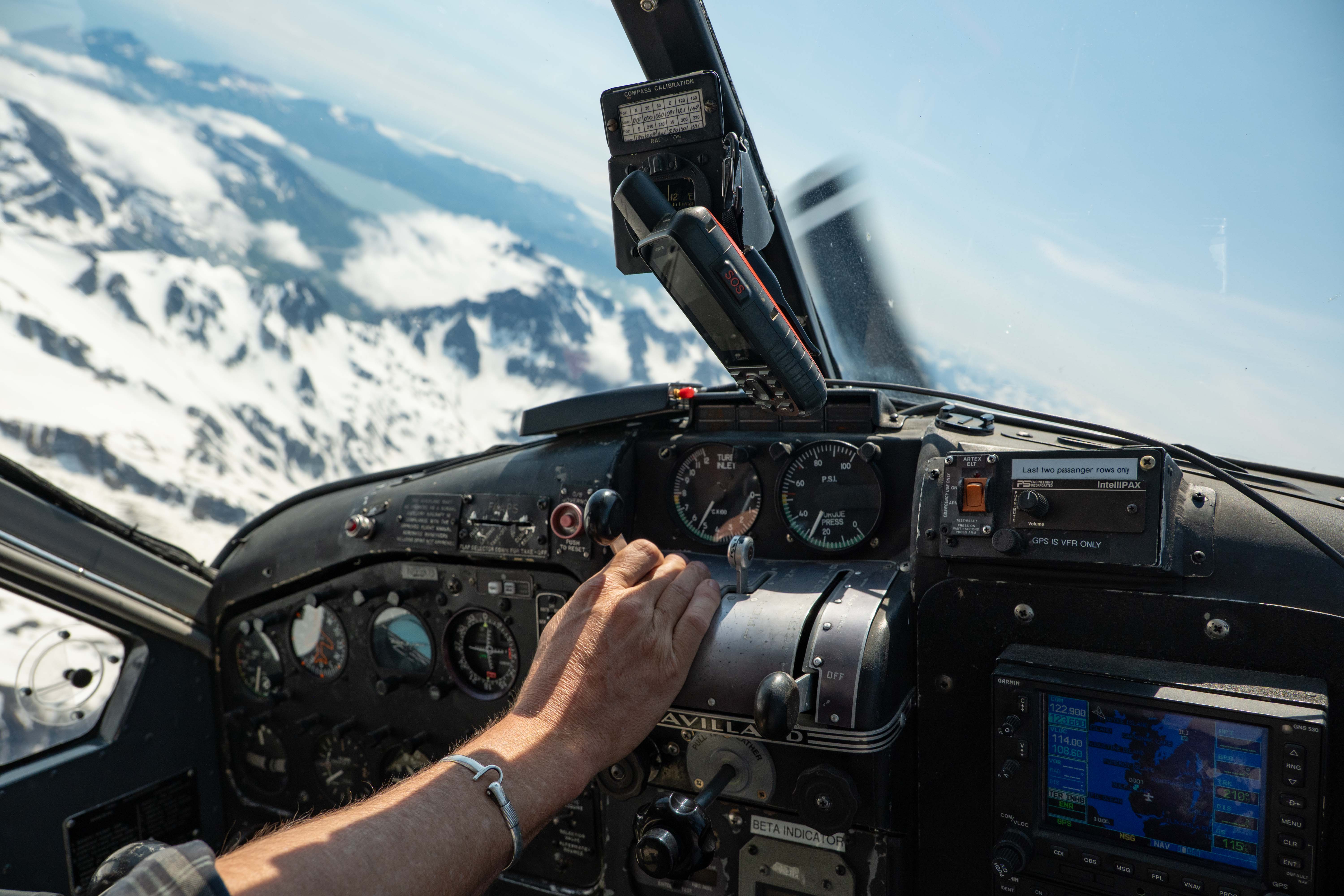
On day three, we drove north from Anchorage to Talkeetna — a town with genuine character, the kind of place where pilots eat breakfast at the counter and everyone seems to be headed somewhere remarkable. We checked in with K2 Aviation for a Denali fly-in and met our pilot Dorothy. Clearly in command, calm, with a keen eye on conditions, she taxied the DeHavilland Otter across the airstrip while the tower advised of "increased moose activity at Talkeetna Airport" and three FireBoss crop dusters scrambled ahead of us, headed up to drop water on the Riley fire. Dorothy hit full throttle, lifted off in a few hundred feet, and we were climbing. The weather all summer had been spectacular; this happened to be one of the few cloudy days, and a glacier landing was uncertain. No matter. At ten thousand feet the cloud deck thinned, and Denali emerged above everything else at 20,310 feet, enormous and indifferent to our presence, surrounded by a range that would be impressive anywhere else and here looks almost modest by comparison.
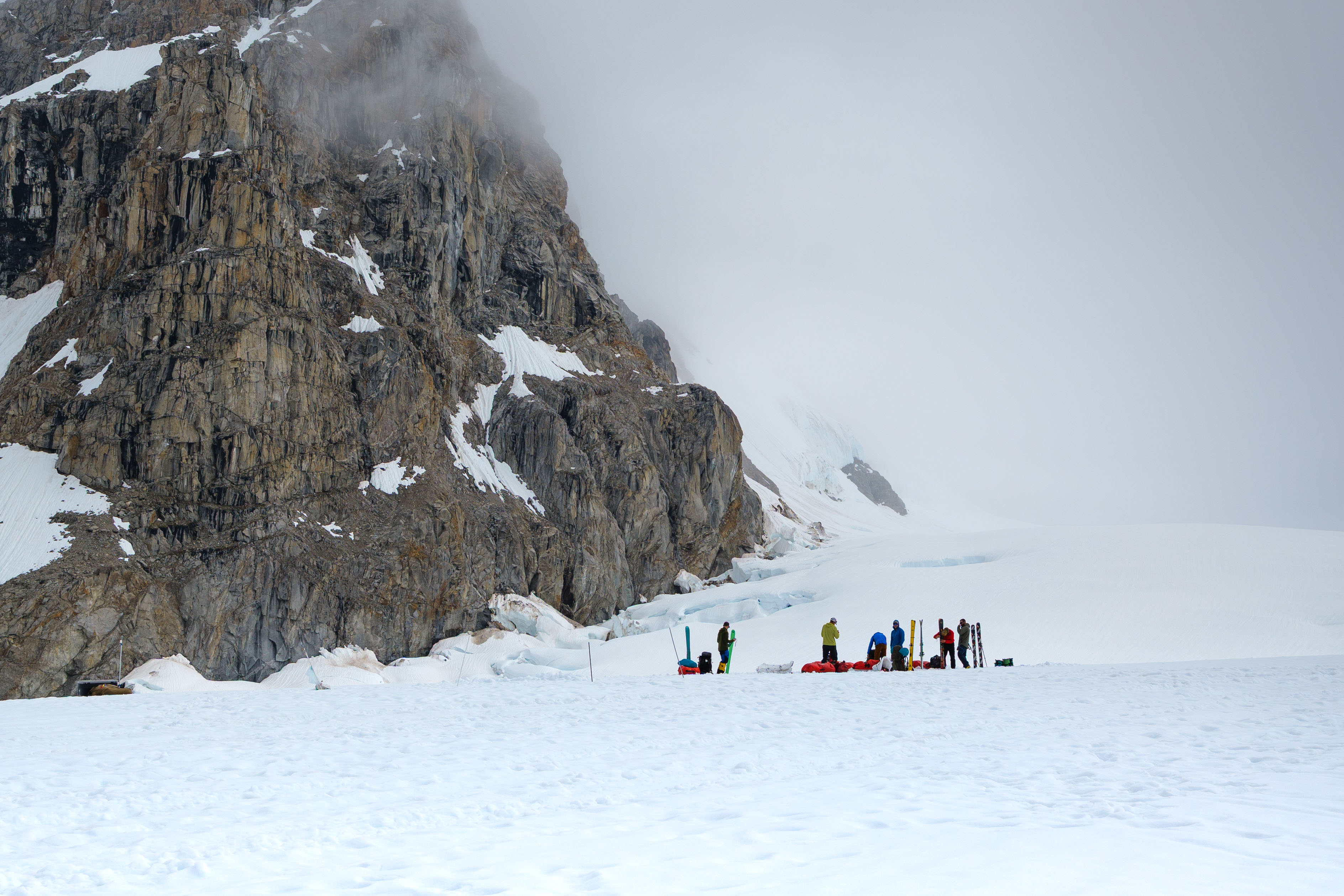
Dorothy flew on visual rules, threading valleys and crevasse fields by memory, weaving through the range while glaciers flowed beneath us for dozens of miles in every direction. She called the first potential landing site. Then, a few minutes later, conditions shifted at Denali base camp — 7,600 feet on the Kahiltna Glacier, at the foot of Mt. Hunter — and we set down. We were the first flight to land that day. A group of climbers was already there on the ice, recently back from a Denali summit, waiting for their return flight. We had perhaps fifteen minutes before clouds rolled in and Dorothy called it. We were back in Talkeetna forty-five minutes after we'd left. It was one of the finer hours I can recall.
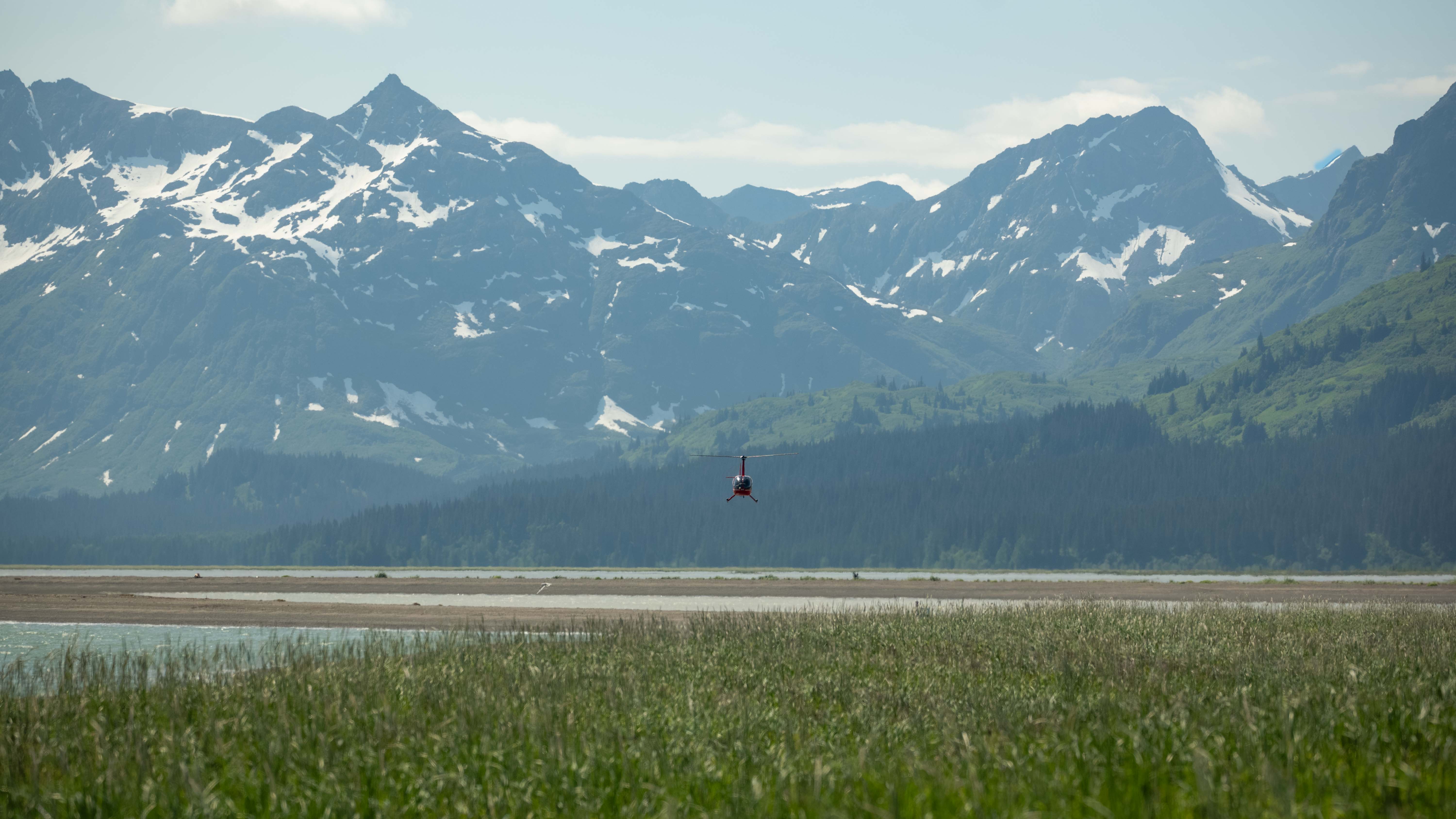
Day five belongs to Lake Clark National Park — and it wasn't close. Lake Clark is among the least-visited parks in the system. No road access. You arrive by boat or bush plane, and we flew in from Homer on a DeHavilland Beaver piloted by William, a self-described prima donna who spends six weeks each summer flying for Northwind Aviation — tourists, film crews, charter runs to places that don't appear on most maps. He'd flown in Dubai, the Virgin Islands, all over. He flew the Beaver with total confidence and zero wasted motion.
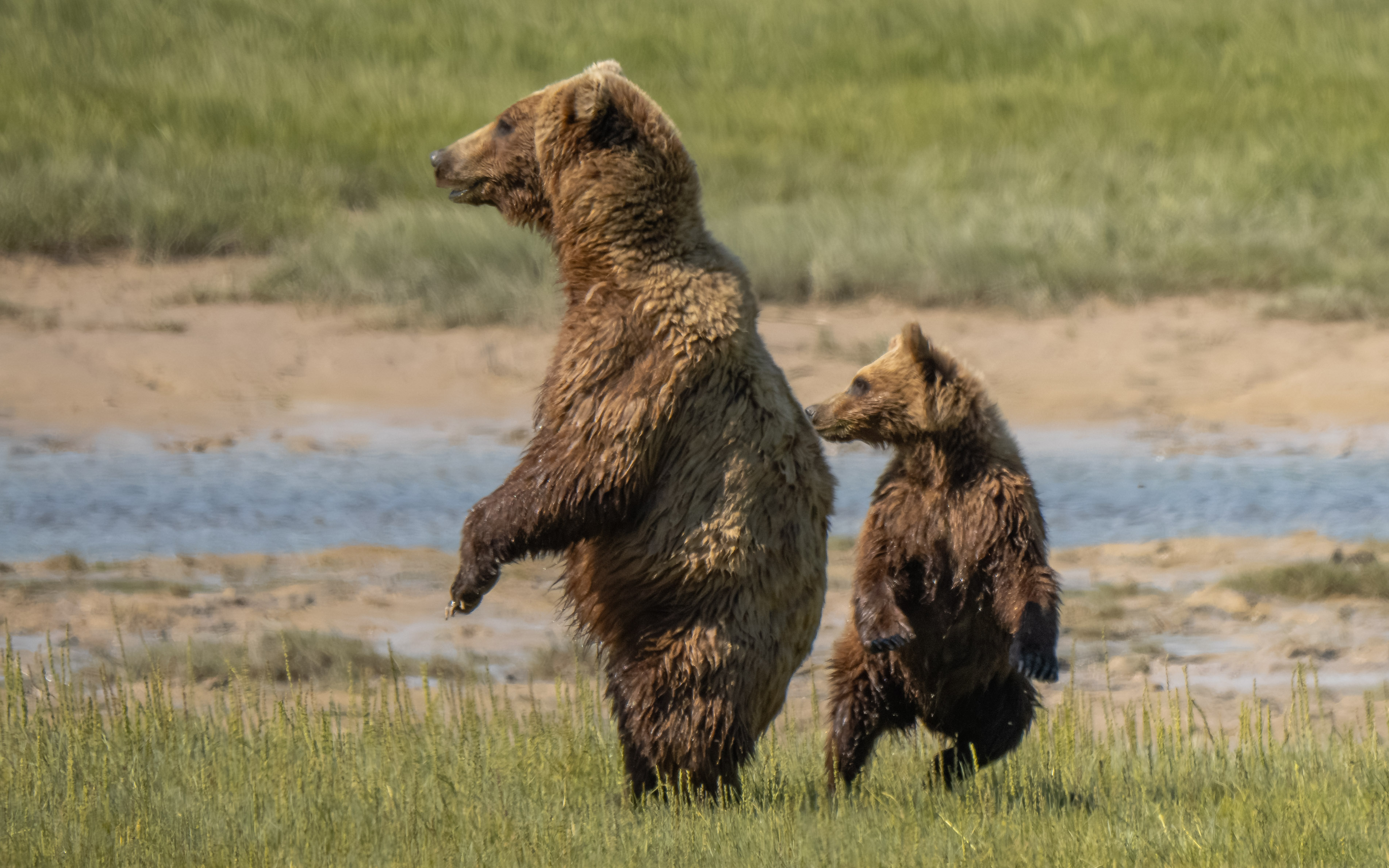
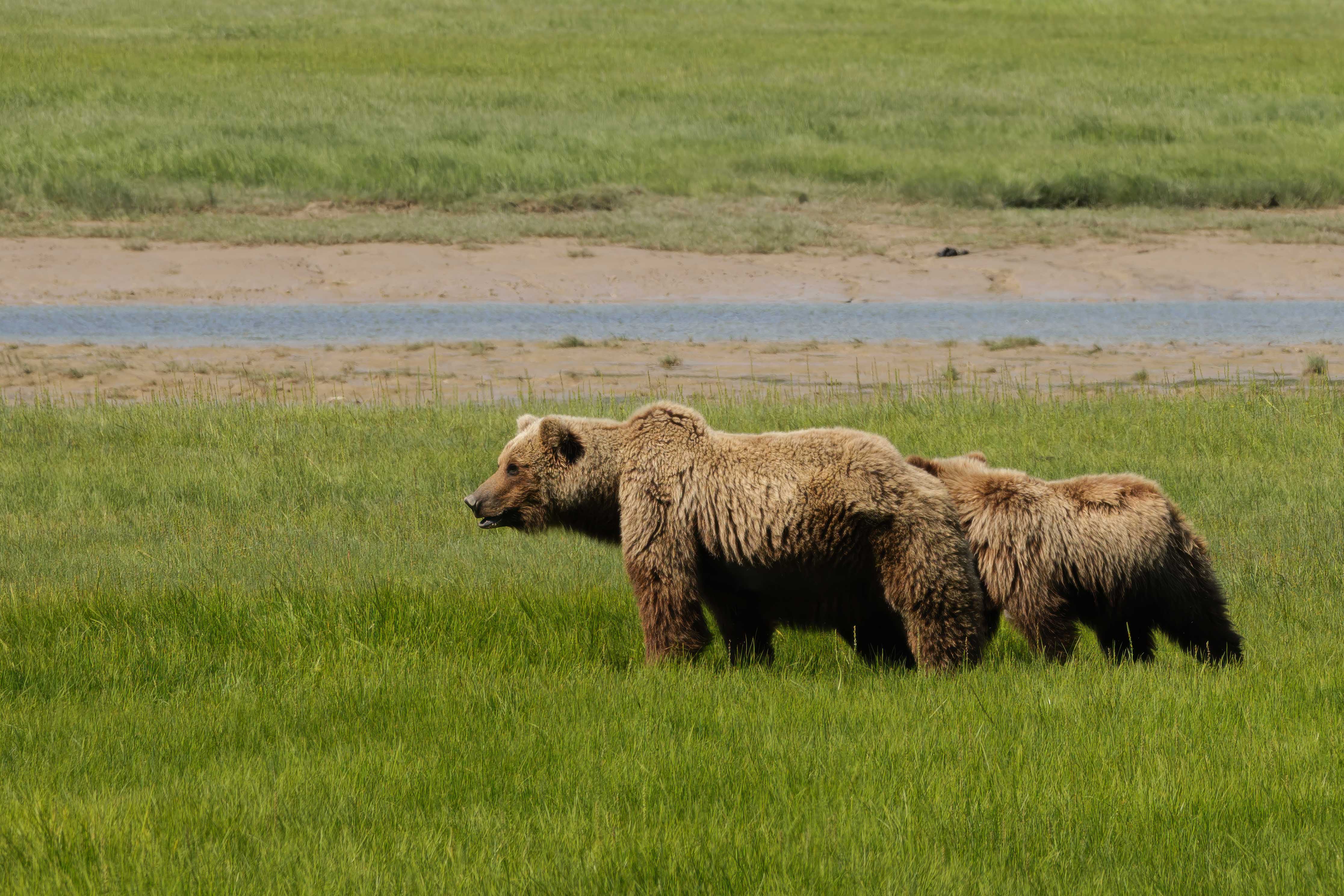
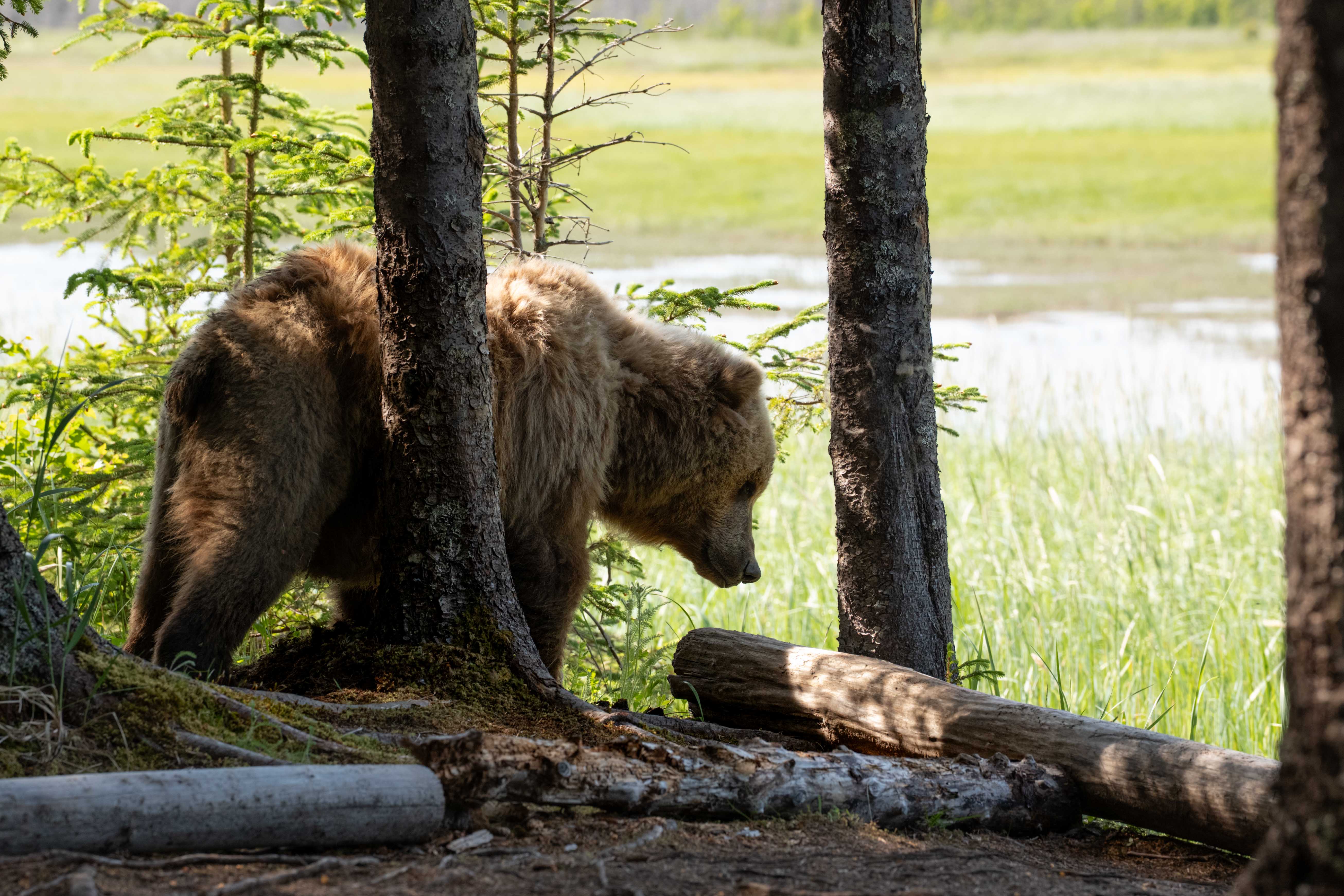
The flight crosses the Cook Inlet and circles Mt. Iliamna, an active volcano at 10,006 feet with two sulfur vents steaming near its peak. We could practically reach out and touch it, and we could absolutely smell it. Then a long valley opened and delivered us to Chinitna Bay, where beach gives way to tidal flats, and then wide meadows to the spruce line in the distance — and where, on the morning we arrived, nineteen coastal brown bears were grazing on protein-rich sedge grass, fattening themselves up for winter, completely unbothered by us. They were enormous and unhurried. Ferocious and lazy. The most impressive animals I've ever been near. We stood there for a long time and said very little. Some experiences resist narration, and this was one of them.
We finished the week with a seven-hour Kenai Fjords cruise out of Seward — bald eagles, puffins, orcas, humpbacks, sea lions, harbor seals, and a margarita made with ice calved off the Holgate Glacier. Alaska has a way of making sure you leave wanting more. Mission accomplished.